Short answer
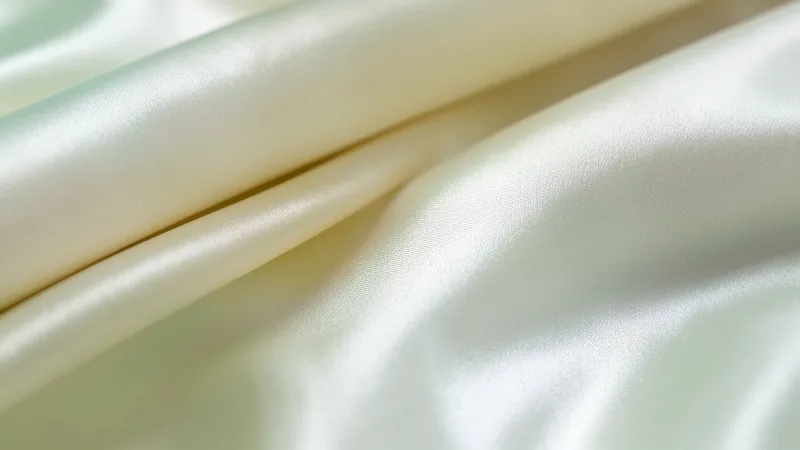
Cupro is a regenerated cellulose fibre made by the cuprammonium process: cellulose (usually cotton linters or wood pulp) is dissolved in a copper–ammonia solution and spun through a spinneret into a coagulation bath. The resulting filament is fine, smooth and lustrous, with a silk-like hand and good drape. Cupro is a generic fibre name in the BISFA classification, not a proprietary brand. Dyeing cupro uses dye classes suitable for cellulosic fibres; confirm the required specification for the fabric construction and end use with the BCI team.
What cupro is and how it is made
Cupro is produced in a few stages:
- Raw cellulose — typically cotton linters or wood pulp.
- Dissolved in a copper-salt/ammonia solution (cuprammonium liquor).
- Extruded through a spinneret into a coagulation bath — usually dilute sulphuric acid — to precipitate cellulose into fine filaments.
This process is distinct from rayon/viscose (viscose spinning) and from TENCEL™ lyocell (organic-solvent spinning with N-methyl-morpholine N-oxide). The silk-like hand of cupro comes from the spinning technology, not from a brand name.
Cupro vs modal and lyocell
Cupro, modal and lyocell are generic fibre names in BISFA’s classification. Lenzing sells branded TENCEL™ Lyocell and TENCEL™ Modal fibres; lyocell and modal remain the generic fibre types. A performance claim about a branded TENCEL™ fibre should not be generalized to every fibre of the same generic type.
A study of knitted single-jersey fabrics made from viscose, modal, lyocell and cupro found fibre type is an effective parameter for physical properties. In that study, cupro fabrics recorded the highest air permeability, while bursting strength was highest for lyocell and abrasion resistance for modal. Those are results for the tested samples — not a universal ranking of all fabrics.
Drape and hand
Cupro is known for a smooth, lustrous hand and good drape. For a particular garment or textile use, specify the required hand and drape in the job brief, then confirm the fabric construction with the BCI team before ordering.
Cupro and dyeing
Cupro is cellulosic, so its dyeing needs a dye class suitable for cellulose. BCI’s company profile lists Cupro among the fibres it handles and lists reactive and vat dyes for cellulosic fabrics. BCI’s general dyeing routes are exhaust (jet), continuous and semi-continuous (cold pad batch); confirm with BCI which route and dye class suit the specific Cupro construction and order. Before ordering, state the dye class, required test methods and any lab dip in the job brief.
Specifying cupro
When specifying cupro in a job brief, write:
- Fibre type and feedstock (pure cupro, or a blend).
- Weight (GSM) and construction (woven or knit).
- Fastness and durability targets — wash fastness (ISO 105-C06 or AATCC 61), dimensional stability (ISO 5077; ISO 6330 is a laundering/drying procedure, not a dimensional-change measurement).
- Any method beyond the in-house list (e.g. AATCC TM195 for liquid-moisture management) must be put in the spec and confirmed with BCI.
QC and lab dip before ordering
Before ordering at scale, confirm the lab dip or approved shade sample; it is the reference for bulk dyeing. BCI’s colour lab uses a spectrophotometer for colour analysis. BCI’s 10-point system quality report for every lot is a defect-scoring report, separate from results of named laboratory tests. BCI’s three checkpoints: greige inspection before dyeing, in-process control and inspection at packing. The in-house lab tests to ISO, JIS, AATCC and Daimaru methods. Specify the required method and acceptance criteria; do not assume a fabric passes a test that is not specified.
Boonchuay’s commission-dyeing page lists OEKO-TEX® STANDARD 100 Class I for certified qualities.
Cupro vs TC and TR
TC and TR are BCI's main uniform fabrics: TC is cotton blended with polyester; TR is rayon blended with polyester — heavier than TC, softer and smoother, and a little less durable. Cupro is a different fibre from BCI's TC and TR uniform fabrics. Do not use the durability of TC or TR as a proxy for cupro.
FAQ
- What is cupro? A regenerated cellulose fibre made by the cuprammonium process: cellulose is dissolved in a copper–ammonia solution, then extruded through a spinneret into a coagulation bath.
- Is cupro the same as TENCEL™ Lyocell or TENCEL™ Modal? No. Cupro, modal and lyocell are generic fibre names; TENCEL™ Lyocell and TENCEL™ Modal are Lenzing branded products.
- Can BCI dye cupro? BCI’s company profile lists Cupro among the fibres it handles. Confirm the suitable construction, dye class and production route for a specific order with the BCI team.
- What should a buyer specify? State the fibre blend, fabric weight and construction, required test methods, acceptance criteria and approved lab dip in the job brief.
Talk to BCI
commission dyeing and finishing service and contact the BCI team for a Cupro fabric specification and approved lab dip.
References
- Terminology of Man-Made Fibres, 2017 — BISFA
- Glossary — Annual and Sustainability Report 2024 — Lenzing
- The Performance Properties of the Fabrics Produced from Cupro and Some Other Regenerated Cellulose Fibers — Textile and Apparel, 2017
- Regenerated fibres — Textile manufacturing and testing — INFLIBNET
- Commission dyeing and finishing — Boonchuay Industrial