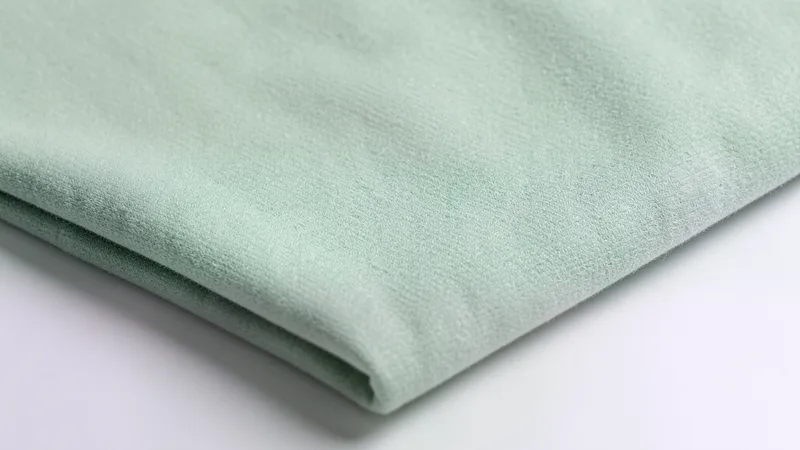
Modal is a regenerated cellulose fibre. TENCEL™ Modal is Lenzing’s branded modal fibre; claims about its production, softness and moisture control apply to that branded fibre and should not be assumed for every modal textile.
What modal is
Modal is a regenerated cellulosic fibre; the name alone does not identify a producer or wood source. Lenzing markets its modal fibre as TENCEL™ Modal and says the wood for this branded fibre comes from certified or controlled sources. Its production uses a modified viscose process with resource-efficient technology and high chemical-recovery rates. Lenzing cites Higg MSI v3.12, based on ISO 14040/44 LCA standards, for its claim that TENCEL™ Modal has at least 50% lower carbon emissions and water consumption than generic, unbranded modal; it also reports lower impacts in fossil-fuel abiotic depletion, global warming, water consumption and eutrophication categories.
Generic modal vs TENCEL™ Modal
TENCEL™ Modal is one branded form of modal. Lenzing’s carbon and water comparison applies to that fibre versus generic modal in its Higg MSI v3.12 assessment; it does not establish the same impact for every modal fibre or finished product. Buyers should verify the fibre brand and producer from supplier documentation.
How modal is dyed
Modal is a cellulosic fibre. BCI lists Modal among the fibres it handles and runs batch (jet/exhaust), continuous and semi-continuous (cold pad batch) dyeing routes. Its in-house lab tests to ISO, JIS, AATCC and Daimaru. Examples include wash fastness (ISO 105-C06) and dimensional change (ISO 5077). Buyers should specify the dye class, test method, conditions and required grade in the order spec.
Where modal fits
BCI’s company profile lists Modal among the fibres it handles. Lenzing describes TENCEL™ Modal as having brand-specific softness and moisture-control properties, but those claims do not establish performance for generic Modal or every finished fabric. For a BCI order, confirm fibre content, yarn, construction and finish with the mill, then agree on the required performance tests.
How to specify it
- Verify the fibre: TENCEL™ Modal or generic modal, and the supplier — ask for the certificate or spec.
- Specify fibre/yarn (100% modal or blend), GSM, construction (woven/knit), colour and dye class.
- Specify tests: wash fastness (ISO 105-C06), light fastness (ISO 105-B02), and dimensional change (ISO 5077), or equivalents — agree the methods with the mill.
MOQ is negotiable — discuss with the mill; BCI does not publish a lead time. Ask the BCI team to review the spec before production.
FAQ
What is TENCEL™ Modal? It is Lenzing’s branded modal fibre. Lenzing reports a modified viscose process with high chemical recovery and an Higg MSI comparison against generic modal; those claims apply to TENCEL™ Modal, not all modal fibres. Does modal wash well? Lenzing says TENCEL™ Modal’s fibre cross-section and tenacity favour fabric softness through repeated washing and drying cycles. The result depends on the yarn and fabric construction; agree on a method and test conditions. Can BCI dye modal? Yes. BCI’s profile lists Modal among the fibres it handles. Specify the dye class and test method, conditions and required grade with the mill.
References
- TENCEL™ Modal — Lenzing — brand-specific properties, process, and Higg MSI claims
- ISO 105-C06:2010 — International Organization for Standardization — colour fastness to laundering
- ISO 5077:2007 — International Organization for Standardization — dimensional-change measurement after washing and drying
- ISO 105-B02:2014 — International Organization for Standardization — colour fastness to artificial light
- Boonchuay Industrial — Commission Dyeing and Finishing — commission dyeing service
Talk to BCI
Talk to BCI | Fabric dyeing