
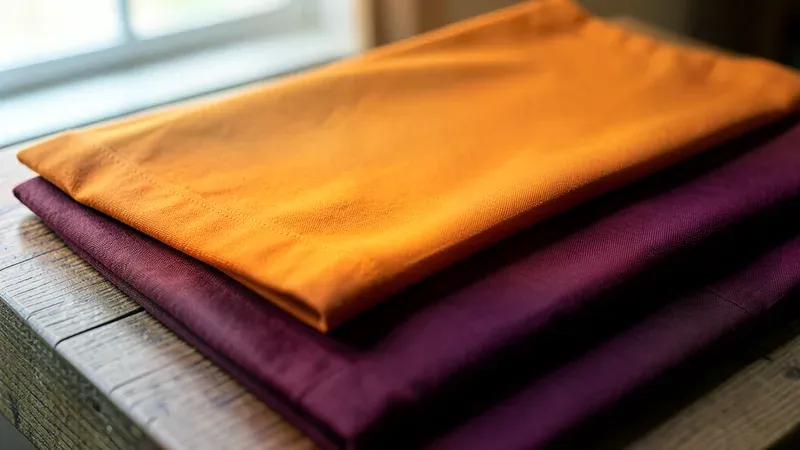
When comparing finished monk-robe fabric, ask which finishes apply to each swatch and check feel, shade and dimensions separately. Boonchuay’s product page describes mercerising, sanforising and soft calendering.
What each finish does
- Mercerising can affect the surface appearance of cotton and how it takes dye.
- Sanforising is used to control dimensional change.
- Soft calendering changes the surface feel.
Wash behaviour
If performance after washing matters, agree on the wash method and which properties to measure on the finished cloth.
- Compare the colour and hand of physical swatches under the same lighting.
- Evaluate dimensional change using the agreed wash and drying method.
- Confirm which test methods and results are available for the order.
What to ask the mill or sales team before ordering
- Which finishes apply to this cloth?
- What dimensional change was measured under the agreed wash procedure?
- Which shade reference should we approve?
- Which finished-fabric test results can the mill confirm?
- Can I compare swatches for the same intended use?
Frequently asked questions
Do the finishes always come together? Ask sales which finishes apply to the quality and fibre you are considering.
What should buyers check after mercerising? Compare surface and shade on the finished sample. Use a separate test if wash colourfastness matters to the order.
How should I check shrinkage? Ask for dimensional-change results on the actual cloth under the agreed wash conditions.
What can I compare on a calendered swatch? Compare surface feel. Ask for a separate test if strength is a requirement.
Talk to BCI
Ask the sales team to confirm the finish for the quality you are considering. See Monk Robe Fabrics