
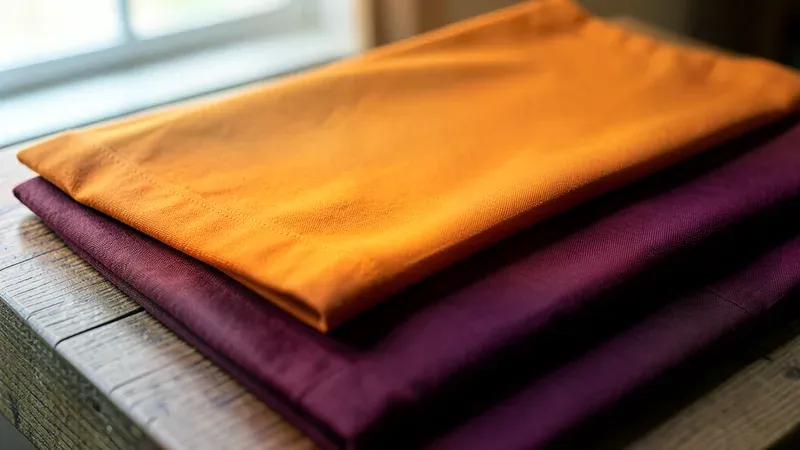
Plan your assortment of finished monk-robe and sabong cloth from actual sales and customer requests. Track each quality and shade so the next order can be checked against the approved reference.
Starting point: real customer demand
Before ordering stock, answer:
- Who are the shop's buyers (temples, shops, robe makers)?
- What is the fabric quality the shop already sells (top-weight, bottom-weight)?
- Which colour ranges do buyers actually buy (reference cloth that already sold)?
- How does the shop sell (retail by metre, wholesale by roll, or made to order)?
What to record for each stock unit
For each piece of stock, record:
- Quality — per the mill's specification (e.g. top-weight, bottom-weight)
- Shade reference — colour against a lab dip or an approved cloth reference
- Usable width — measured actual width, not the stated width
- Quantity — metres or rolls as agreed with the mill
- Reorder status — who ordered it, and when it was (re)ordered
Reordering and stock updates
Do not assume stock or quantities:
- Order against real demand — add stock only when a customer asks for something new or the stock runs low
- Keep the approved shade reference — repeat orders use the same reference; if a shade or spec changes, notify the mill with evidence before reordering
- Send a reference for new shades — if a customer wants a new shade, send a cutting or colour reference to the mill before ordering
- Negotiable MOQ — the minimum quantity is agreed with the mill or sales team for the quality and volume needed
FAQ
How much should the shop start with? Use sales history and confirmed orders by quality and shade to estimate opening stock in metres or rolls.
What should be ordered first? The combinations the shop already sells and that customers actually want — after confirming specification and shade with the mill.
How should repeat orders be handled? Keep the approved shade reference, and record who reordered, when and by how much.
Talk to BCI
See Monk Robe Fabrics or contact BCI sales.