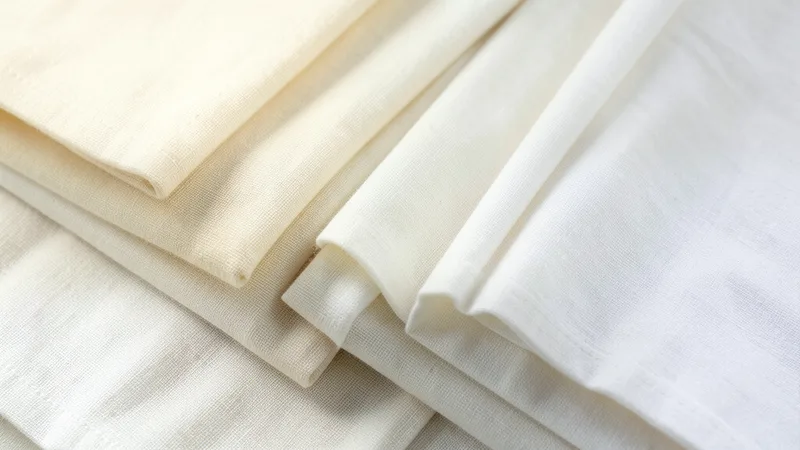
Organic cotton fabric contains cotton grown under an organic farming standard. Farm certification and textile certification answer different questions. When buying fabric, check what evidence covers the fibre, the processing chain and the goods in the actual order.
Farm certification: IFOAM Family of Standards
GOTS and OCS require qualifying organic fibre inputs. Check that the farm standard and the specific fibre certification are accepted under the textile scheme you intend to use.
To make a GOTS or OCS product claim, check the downstream certification and claims rules for that scheme and any local labelling rules that apply to your market.
GOTS vs OCS: two different schemes
The two most common organic-cotton certifications answer different questions and are not interchangeable.
GOTS covers certified organic fibre content and applicable processing, manufacturing and trading stages. Its two label grades require at least 70% certified organic fibres for “Made with Organic Materials” and at least 95% for “Organic”. The standard also sets environmental, chemical and social criteria.
OCS verifies certified organic content and its chain of custody. It does not add environmental, chemical or social processing requirements. Check the applicable Textile Exchange claims policy to determine whether the product qualifies for a specific OCS claim or logo.
Check the farm organic standard and the scope of the textile scheme separately. Ask your supplier for documentation that links the certified claims to the actual goods.
Distinguish three layers of evidence — do not collapse them into one
- The farm's certification (government-controlled organic standard) — growing
- The downstream chain-of-custody scheme (OCS or GOTS) — processing and manufacturing
- Evidence for the actual order — scope certificates (facility certification identifying the certified scope) vs transaction certificates (specific certified goods and volume)
An unqualified "organic" claim does not say which of these covers the fabric.
Organic vs conventional cotton
Organic farming follows a recognised farming standard and restricts specified inputs. Fabric properties such as weight, colourfastness and hand depend on the fabric and its treatment. Ask for test evidence on the finished fabric against your specification.
Dyeing organic cotton
BCI uses reactive and vat dyes for cellulosic fabrics. Confirm the suitable dye, fabric construction and intended performance before placing the order. If the finished product needs GOTS or OCS certification, ask what is covered at this processing stage.
Boonchuay Industrial uses exhaust (jet), continuous and semi-continuous (cold pad batch) routes. The in-house lab tests to ISO, JIS, AATCC and Daimaru. BCI produces a 10-point system quality report for every lot. It records defects.
Specify in the spec:
- Certification: name the scheme, proposed claim and certification scope.
- Organic content: specify the required percentage of certified organic fibre.
- Construction — 100% cotton, TC, knit or woven, GSM (TR is rayon/polyester, not a cotton blend)
- Test methods — wash fastness (ISO 105-C06 / AATCC 61), dimensional stability (ISO 5077), light fastness (ISO 105-B02)
- Lab dip — approve a lab dip or shade sample before placing the bulk order
Questions to ask the seller
- Which certification covers this fabric, and what does the certificate cover — the farm, the processing stage, or the finished product?
- What certified organic content and claim does the actual product qualify for?
- Is the claim backed by a transaction certificate for this order, or only a scope certificate?
- Has the fabric been tested, and against which methods?
- Does the certificate cover the product category of this fabric?
FAQ
Which dye can I specify? BCI uses reactive and vat dyes for cellulosic fabrics. Confirm the suitable dye, shade and process for the actual order.
Q: What is the difference between GOTS and OCS? — A: GOTS covers content and process (environmental, social and chemical criteria) across the supply chain; OCS covers content and chain of custody only, with no environmental, social or chemical criteria.
Which certification should the label carry? Ask the supplier and its certification body which claim the actual certified product qualifies for. Verify the label under the applicable GOTS or OCS claims rules.
Can BCI supply an order under an organic textile scheme? Ask the team to confirm the certification and its scope for the specific article and processing steps before ordering.
Q: Does "organic" guarantee a specific property? — A: No. The standard covers the farm and the chain of custody; physical properties come from the spec and the test methods.
Talk to BCI
To specify organic cotton fabric or request a lab dip — see the fabric dyeing service or contact us.
References
- GOTS key features — Global Standard gGmbH
- GOTS FAQs — Global Standard gGmbH
- Organic Cotton Certification — Textile Exchange
- Organic Content Standard (OCS) — Textile Exchange