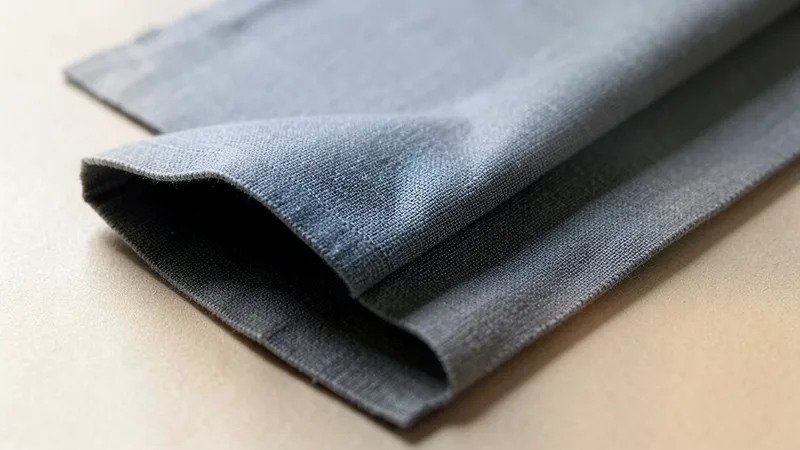
Recycled polyester (rPET) is polyester made with recycled polyethylene terephthalate (PET). In one mechanical recycling route, used PET bottles are sorted, cleaned and shredded, and the PET is remelted before being spun into fibre. Ask for the actual feedstock and process when they matter to your specification.
What recycled content means under ISO 14021
ISO 14021 describes recycled content as the share of recycled material by mass. Recycled inputs can come from the pre-consumer or post-consumer waste stream.
- Pre-consumer — material diverted from the waste stream during a manufacturing process, excluding rework, regrind or scrap returned to the same process that generated it
- Post-consumer — material generated by households or by commercial, industrial and institutional facilities in their role as end-users, including returns of material from the distribution chain
The GRS and RCS schemes of Textile Exchange accept both pre-consumer and post-consumer as recycled content, but recycled content remains a defined, narrow concept — not just any manufacturing waste.
How rPET differs from virgin polyester
Both rPET and virgin polyester can be PET. The sources of the material differ, and finished fabrics can also differ in construction, weight, shade and performance. Ask the supplier for evidence of recycled content and test the fabric against the intended specification.
Dyeing rPET
Disperse dyes are commonly used for polyester. Ask the dyehouse to confirm the process and shade for the proposed fabric. If the order requires a function such as water repellency, specify the appropriate test method and acceptance criteria.
Boonchuay Industrial (BCI) runs exhaust (jet), continuous and semi-continuous (cold pad batch) routes, and uses disperse dyes for polyester. Confirm the route for the specific rPET fabric with BCI.
GRS vs RCS: what the proof means
Textile Exchange owns the RCS and GRS standards; accredited third-party certification bodies issue the certificates.
RCS (Recycled Claim Standard)
- Suits products with at least 5% recycled content by weight
- Verifies recycled input and chain of custody from source through delivery
- No social or environmental criteria
- Check the applicable claims policy for RCS 100 and RCS Blended label eligibility.
GRS (Global Recycled Standard)
- Requires at least 20% recycled content to certify
- Adds social, environmental and chemical restrictions
- Includes chain of custody across every step of the supply chain
- The GRS label applies only at 50% or more recycled content
Both schemes verify recycled content; they differ in the threshold and in the extra social/environmental/chemical requirements in GRS. Note the distinction between scheme eligibility and the consumer-facing claim: the scheme certifies the product, while the label is governed by the Claims and Labeling Policy.
Scope certificate vs transaction certificate
- A scope certificate identifies the sites, processes and products within the certified scope.
- A transaction certificate identifies which certified goods and transactions or shipment details it covers. Ask the seller for evidence covering your purchase.
Certification is not the only possible substantiation; ask for chain-of-custody documentation for the actual lot shipped.
Materials Matter transition
Textile Exchange is introducing Materials Matter in phases. The new standard becomes effective on 31 December 2026, with mandatory dates and transition rules defined by audit scope and by the separate claims policy. Ask the supplier and its certification body which standard and claims rules cover the order.
How to specify recycled polyester
Before ordering, write in the spec:
- Recycled content — 100% recycled or blended (with percentage), pre-consumer vs post-consumer
- Certification and label — RCS, GRS or none; if GRS, the label only applies at 50% or more recycled
- Transaction certificate — ask for a TC for the actual shipment, not just the mill scope certificate
- Construction and weight — GSM, woven or knit, fibre blend; confirm construction, shade and process for this order
- Test methods — e.g. wash fastness (ISO 105-C06 / AATCC 61) and dimensional stability (ISO 5077) — ISO 6330 is a laundering/drying procedure, not a dimensional-change measurement
- Lab dip — approve a lab dip or shade sample before placing the bulk order
Ask the mill:
- Which standard covers the product
- Minimum recycled content expected
- Whether the shipment ships with a TC for that lot
QC and lab dip before ordering
Before ordering at scale, confirm the lab dip or approved shade sample — the approved sample is the standard for every lot. The colour lab uses a spectrophotometer, and the bulk shade is checked against the approved reference. BCI runs batch (jet), continuous and semi-continuous dyeing to cover volume and shade range. Three checkpoints: greige inspection before dyeing, in-process control and inspection at packing. The 10-point system quality report is a defect-scoring report for every lot — not a universal test of every lot with every method. BCI's in-house lab tests to ISO, JIS, AATCC and Daimaru. For methods beyond the in-house list, put the test in the spec and confirm with BCI.
FAQ
Is rPET the same as virgin polyester? Same polymer (PET) — the difference is the feedstock and provenance, not the chemistry. Properties cannot be assumed identical just because both are PET; confirm construction, weight and shade for this order.
What does GRS certify? At least 20% recycled content by weight, meeting social/environmental/chemical requirements, with chain-of-custody documentation across every step. The GRS label requires at least 50% recycled.
What does RCS certify? At least 5% recycled content and chain-of-custody documentation — with no social or environmental criteria.
Why ask for a transaction certificate? It identifies the certified goods and transaction or shipments it covers. Check its scope against the actual purchase.
Can rPET be dyed like virgin polyester? Disperse dyes are commonly used for polyester, but the actual fabric and shade determine which process the mill should confirm.
Does BCI dye recycled polyester? BCI lists disperse dyes among its dyestuffs — specify the composition, certification and test methods before ordering.
Talk to BCI
If you need a fabric specification or a lab dip for recycled polyester — see fabric dyeing service or contact us.